
In short
Turn the board so a light square sits at the bottom-right corner for both players. Place the pieces on the back row in this order: rook, knight, bishop, queen, king, bishop, knight, rook. Put eight pawns on the row in front. The queen always starts on a square of her own colour, and White moves first.
Knowing how to set up a chess board takes about a minute to learn. Getting it wrong, though, can take a whole game to notice, usually when someone’s king looks oddly uncomfortable. This guide by Chess Bharat covers the correct setup step by step, the mistakes that catch most new players, and how to start playing once the pieces are standing.
If you are still learning how each piece moves, read our How to Play Chess for Beginners guide.
What You Need
Not much. A board, a full set of 32 pieces, and a flat surface that won’t wobble when your uncle slaps the table after a capture.
A standard board has 64 squares, eight rows by eight columns, alternating light and dark. Each player gets 16 pieces: Eight pawns, a king, a queen, and two each of rooks, knights and bishops.
If you are buying your first set, a few small things help: Look for a board with squares of roughly 5 to 6 cm, and pieces whose kings are usually around 9 to 10 cm tall. This is the tournament-friendly size, and it also keeps pieces from toppling onto each other. Weighted pieces feel better in the hand and stay put. A clock and a scoresheet are not required, and totally optional for now. You will want them once you start playing serious tournaments.
How to Set Up a Chess Board, Step by Step
Step 1: Turn the board the right way
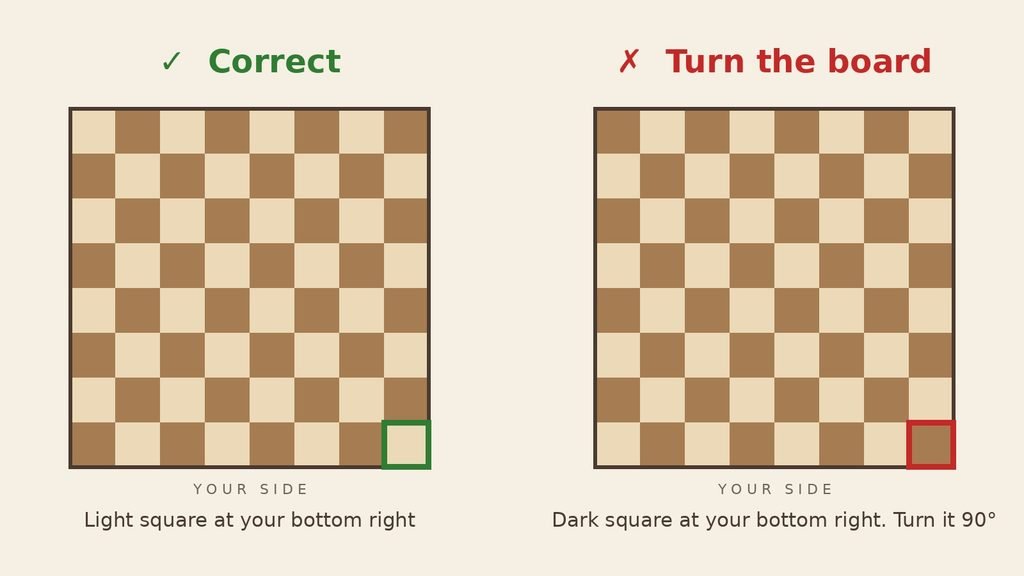
This is the step many people often miss, and it causes the most trouble. Sit down and look at the corner square nearest to you on your right. It must be a light square. If it is dark, rotate the board by 90 degrees.
A simple way to remember it: light on the right. Your opponent will see the same thing from their side, so both of you will have a light square at your right hand.
Step 2: Place the rooks
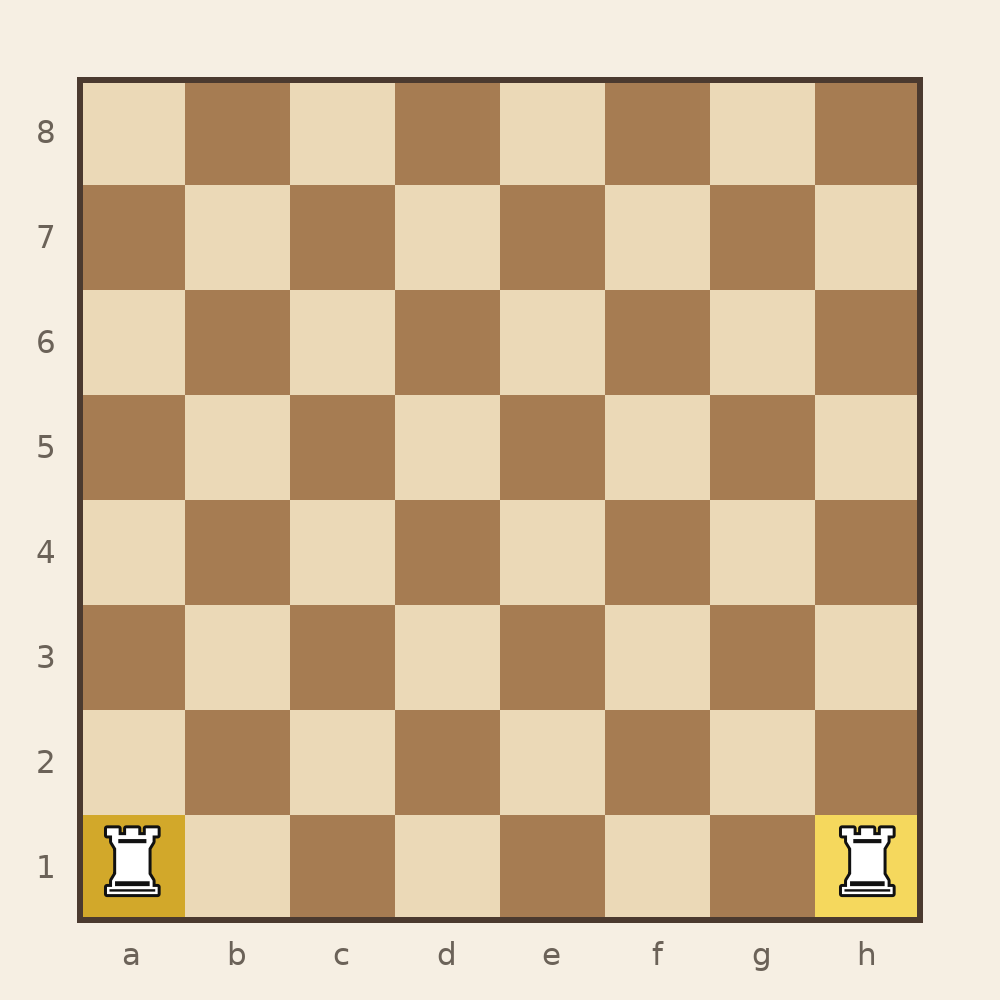
Put one rook in each corner of the row nearest to you. Rooks look like small castle towers, so you cannot confuse them with anything else.
Step 3: Add the knights
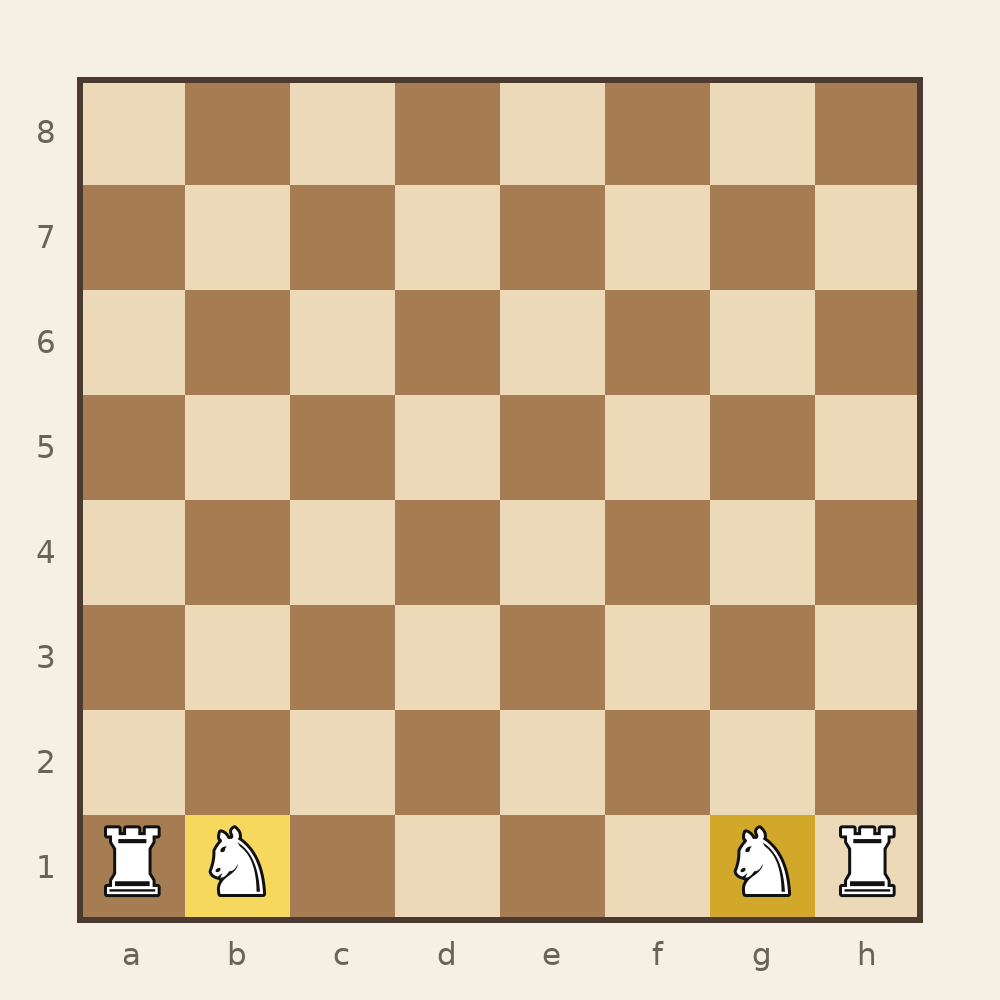
The knights, the horse-head pieces, go right next to the rooks.
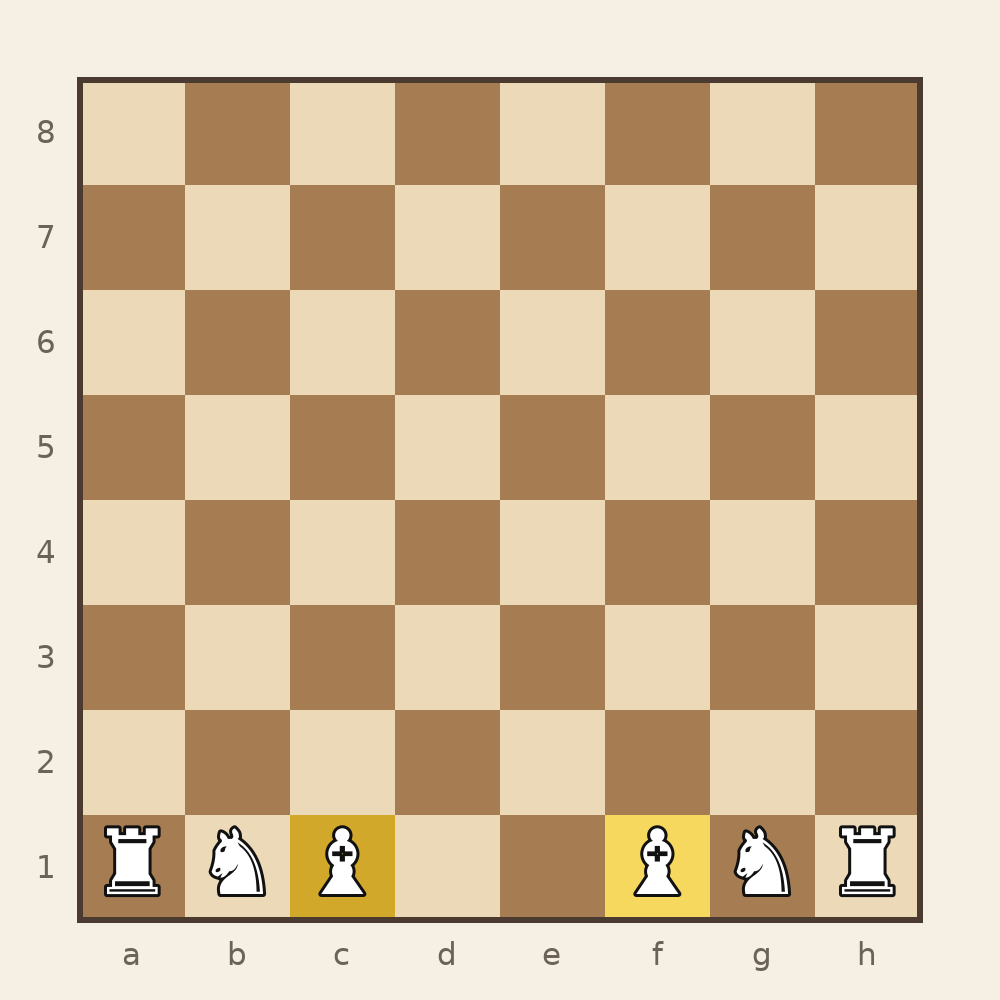
Step 4: Add the bishops
Bishops stand next to the knights. The two empty squares in the middle are for the royal couple.
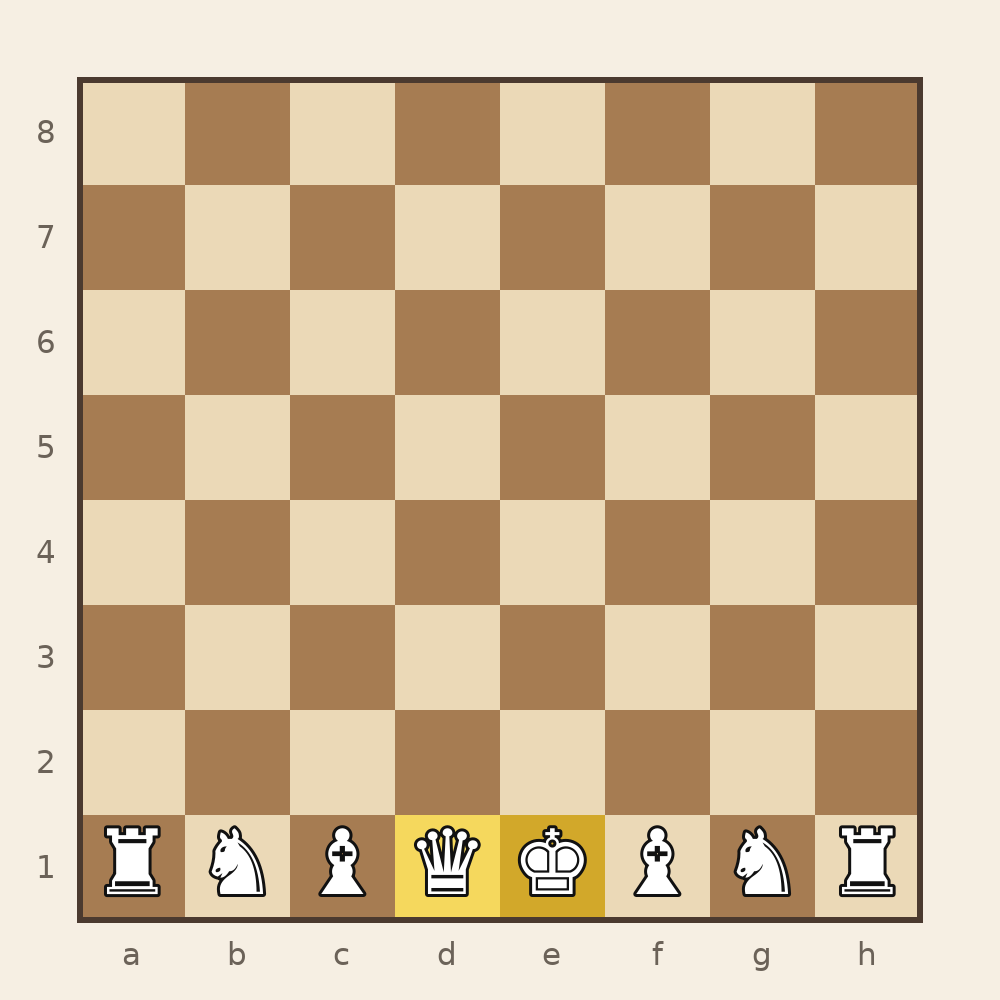
Step 5: Place the queen and the king
This is where most beginners hesitate. The rule is short: the queen goes on her own colour. Of the two empty middle squares, White’s queen takes the light one and Black’s queen takes the dark one. Each king gets the other.
For White, the queen goes on d1 and the king on e1. If your white queen ends up on a dark square, she is standing in the wrong place, and she will let you know by being very unhelpful during the game.
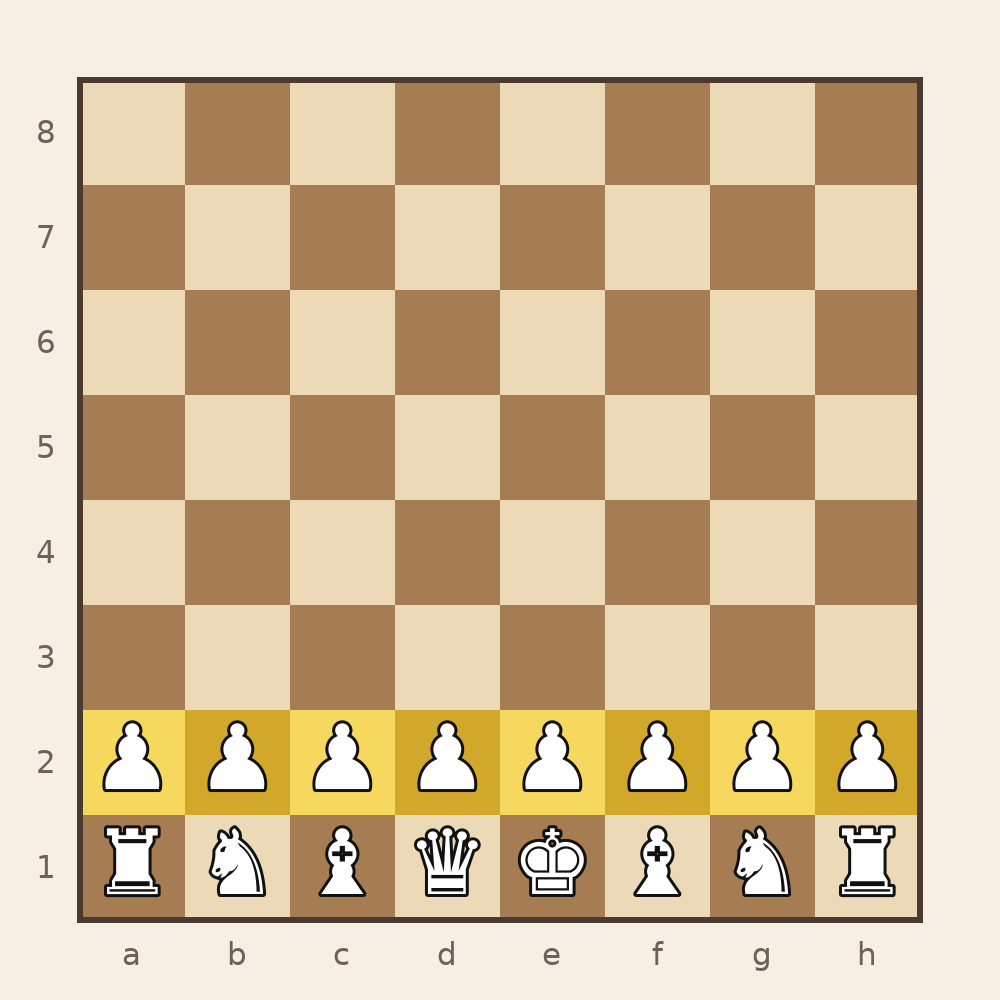
Step 6: Line up the pawns
Put eight pawns on the row in front, one on every square. They form the wall that protects everything behind them.
Step 7: Mirror it for your opponent
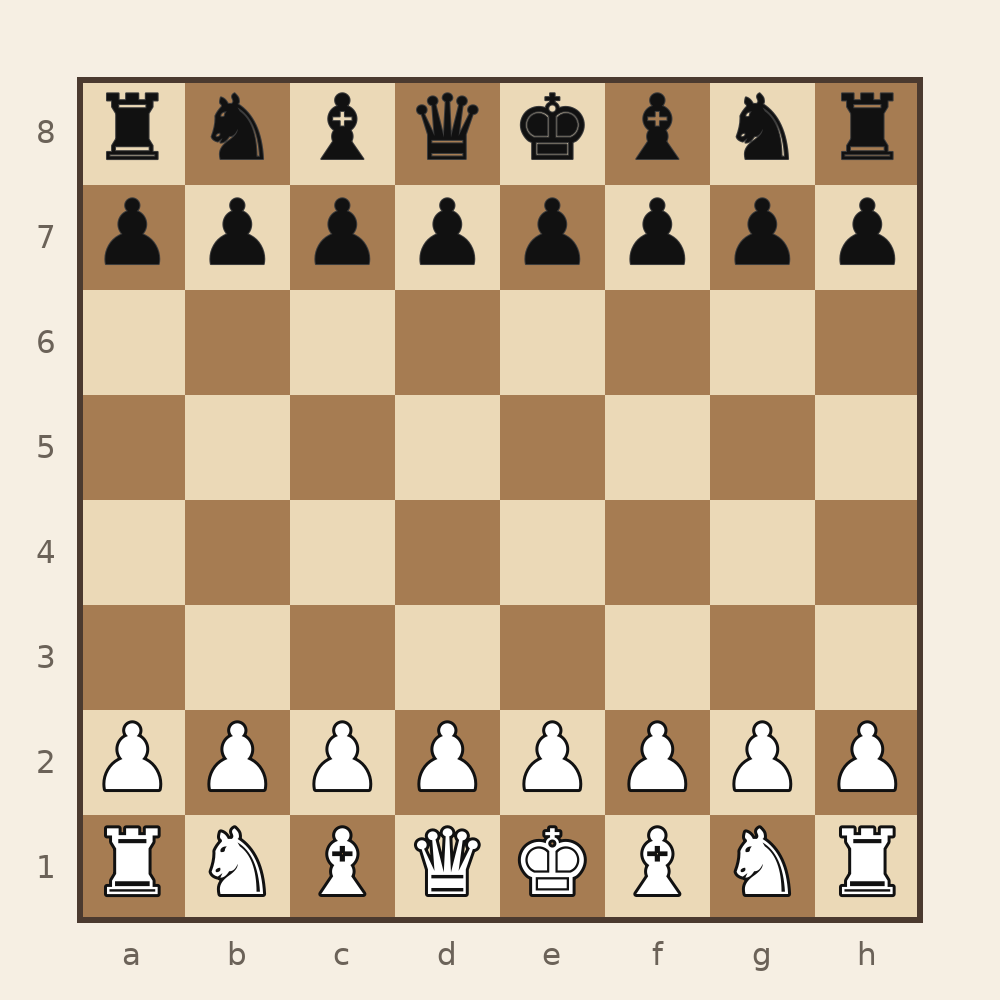
Black’s pieces copy White’s exactly, on the opposite side. Rook, knight, bishop, queen, king, bishop, knight, rook, with eight pawns in front. Each queen faces the other queen, and each king faces the other king.
The Chess Starting Position
Here is what the finished chess board setup diagram looks like from White’s side.
If you are playing Black
Sit on Black’s side and the board is rotated, so the order reads differently from left to right: rook, knight, bishop, king, queen, bishop, knight, rook. It looks as if the king and queen have swapped, but they haven’t. You are just looking at the same board from the other end.
Common Setup Mistakes
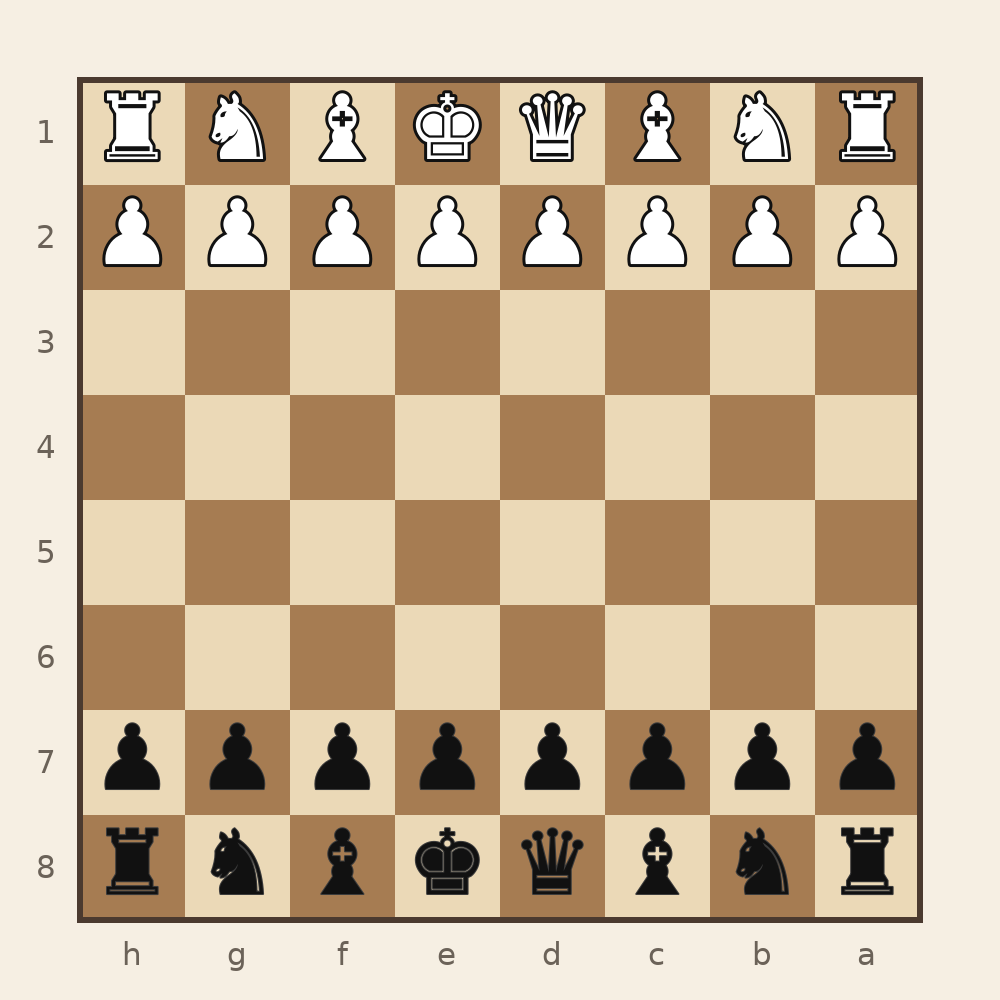
Almost everyone makes at least one of these at the start. They are easy to fix once you can spot them. Here’s how:
- The board is turned the wrong way: Your bottom-right corner is dark. Rotate the board before placing anything.
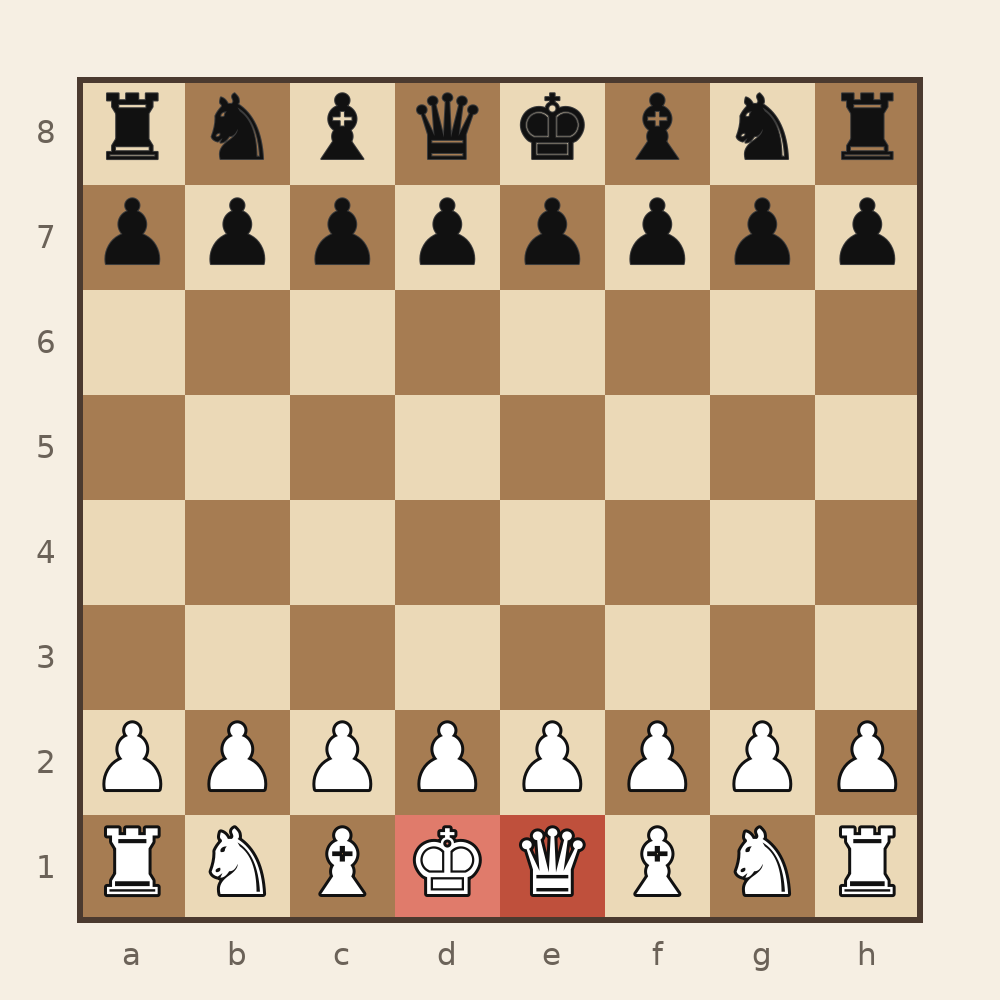
- King and queen are swapped: The white queen is on e1 instead of d1. Check the colour rule: queen on her own colour.
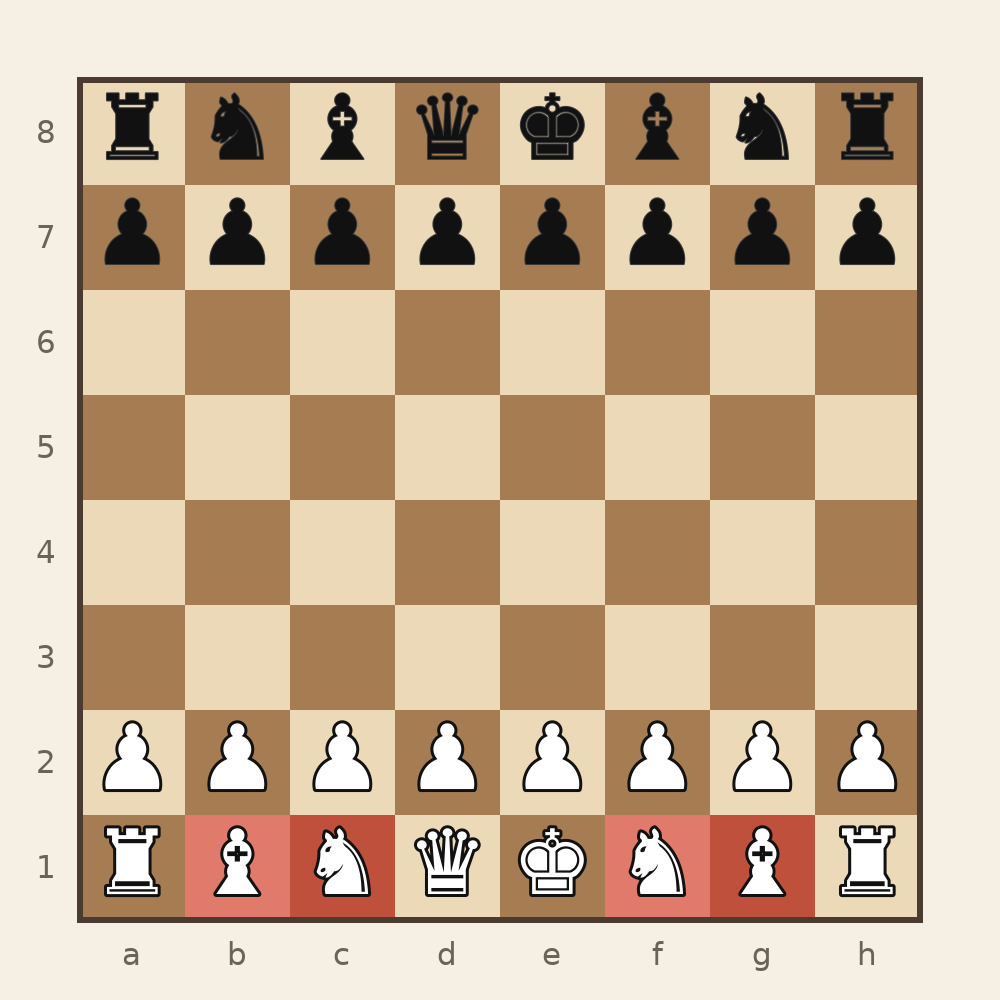
- Bishops and knights are in each other’s places: Knights belong next to rooks, bishops next to the royal pair.
- The two sides don’t mirror: If the two kings don’t stand directly opposite each other, one side has made a mistake.
Quick Setup Checklist
- Light square at each player’s bottom-right.
- Back row: Rook, then Knight, Bishop, Queen, King, Bishop, Knight, and then Rook.
- Queen on her own colour.
- Eight pawns in front.
- Kings face each other. Queens face each other.
We have put this checklist, along with the basic rules, on one page. Our free Chess Bharat Setup & Basic Rules PDF is made for printing. Keep it in the box with your set, and you will never have to count squares again. Download the free chess board setup and rules PDF by clicking below:
Who Moves First?
White always starts. After that, players take turns, one move each. So how do you decide who gets White in a friendly game? The old method is simple. One player hides a white pawn in one fist and a black pawn in the other, then holds both fists out. The other player picks one. Whatever colour they find is theirs. Flipping a coin works too, as long as nobody argues about the coin.
But in tournaments, the organisers assign colours for you.
How to Start Playing Chess: Your First Moves
You don’t need to know any openings yet. Many beginners start with 1.e4, which means moving the pawn in front of the king two squares forward. It opens lines for your queen and bishop and gets the game moving. Two small habits are worth picking up now:
1. Touch-move: In tournaments, if you touch a piece, you must move it, provided it has a legal move. If you touch an opponent’s piece, you must capture it if you can. Casual games are usually more forgiving, but your cousin who “plays seriously” will not be. If you only want to straighten a piece, say “adjust” or “j’adoube” first, then touch it.
2. Release the piece properly: Once you place a piece on a new square and let go, the move is done. No taking it back because you just spotted your queen hanging.
Playing Your First Game
A few things that make the first game smoother:
- Agree on the rules before you start, whether touch-move apply? Can you take back a move? A 10-second chat avoids a long argument.
- If someone makes an illegal move, such as moving a rook diagonally, simply tell them and let them play a legal move with the same piece.
- To offer a draw, make your move first, then ask. Don’t interrupt your opponent’s thinking.
- Shake hands at the end, whoever wins. That is how chess players say “good game”, and it beats sulking.
Once you are comfortable, the next skill is writing your moves down. We cover that in our future guides. Once you know how to set up a chess board, you have mastered the one part of the game where nobody can outplay you.
Turn the board with light on the right, place the pieces in order, check that the queens and kings face each other, and you are ready. Keep the checklist handy for your first few games. After that, your hands will do it without asking your brain.
Frequently Asked Questions
1. Which colour square goes at the bottom-right corner?
A light square, for both players. This is the first rule of correct chess board setup, so remember it as “light on the right”.
2. Where does the queen go at the start?
In the chess starting position, each queen stands on her own colour: White’s on light d1, Black’s on dark d8.
3. Does the setup change when I play as Black?
No, the pieces are the same. From Black’s side, though, the king appears to the left of the queen because you are looking at the board from the other end.
4. Who moves first in chess?
No, chess board setup is identical. From Black’s side the king appears left of the queen, because you sit at the other end.
5. Can I use a board without letters and numbers?
Yes. The letters and numbers on a chess board setup diagram only help with notation, so a plain board works exactly the same.
6. How long does chess board setup take?
Under a minute, once you have done it three or four times. A correct chess board setup may take longer on your first attempt.