

If you play chess competitively, want to play at a higher level, or have any ambition of becoming a serious player, you’ve probably come across FIDE ratings. It’s an international standard that judges how competitive you actually are on a global scale. That’s a much bigger topic than this piece, how FIDE itself works is worth its own read through their manual. What I actually want to cover in this article of Chess Bharat, is narrower and more useful for most of you. It’s how to prepare for a FIDE rated tournament, and get your first international rating the right way.
The Rating Mistake Many Players Make
We personally don’t advise anyone below 1000 online Elo to play in a FIDE tournament expecting to get a rating. Yes, you can definitely play to gain exposure, but not to get a rating. And even if you do get rated, your initial rating will be low enough that you will have to play several tournaments just to climb back up to where you actually belong.
This is also the mistake, I, the admin made, and I often see other people making. My online rapid rating on Chess.com was around 1800, and that’s why my initial rating of 1468 is really just an entry-gate kind of number. I had played in only one FIDE-rated tournament before that, though I had played several club and regional-level events back in the day. And now, to gain rating points, I will have to play several more tournaments.
But one thing I want to make clear is that whether you win or lose, playing a tournament and actually feeling those nerves is its own kind of experience, different from anything online or at a club. You also get to meet other strong players along the way, and that’s where your journey really continues. That’s the heart of how you prepare for a FIDE rated tournament: get the exposure first, chase the number second, and everything below is built around that idea.
Although, to prepare for a FIDE rated tournament, you need to start with being honest about whether you’re actually ready for one. And if you’re ready, that’s just step one, let’s discuss what actually filling that readiness looks like in practice.
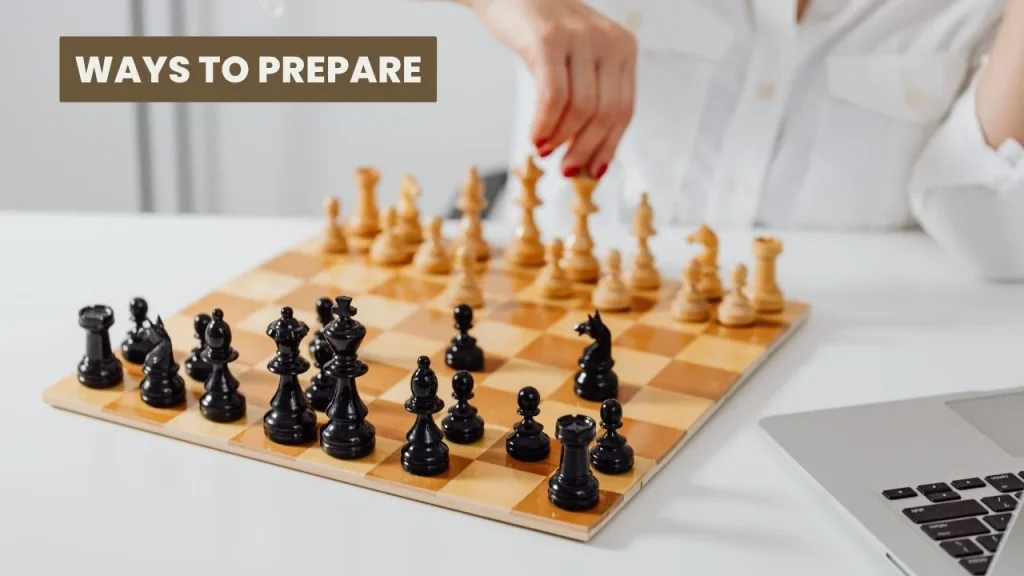
How You Should Train Before a FIDE Rated Tournament
1. Match Your Practice to the Time Control
Start playing slower games at least a month before, to get into the right sense, especially if you’re going to play a classical tournament. Match your practice time control to the tournament’s actual time control too, playing 10-minute blitz all month and then sitting down for a 90-minute classical game is its own kind of shock.
2. Do not Prepare Weird Gambit or Traps
Don’t suddenly start preparing weird gambits or opening traps just because you found them online. Your opponent might not even fall for them, and then you’re left playing a position you don’t understand. Stick to openings which are solid, you already know well, and are comfortable with. The goal isn’t to surprise your opponent, but to reach a playable position where you understand the plans and can focus on playing good chess.
3. Sharpen Your Tactics
Tactics need the same deliberate attention. Many people believe that chess is 90% tactics, and that’s why having good tactical vision and pattern recognition is so crucial. Start by solving tactics online, or you can also go for books like The Woodpecker Method or Encyclopedia of Chess Combinations.
4. Don’t Neglect Positional Play
Tactics alone won’t carry you, though. Positional play and having a good understanding of the game, especially in slower formats like classical, are important for winning. If you’re only good at tactics, you might struggle positionally, so learning about positional imbalances is a must. I’d definitely recommend a book like How to Reassess Your Chess.
5. Train Your Calculation, Not Just Your Intuition
The same goes for calculation. We all have this habit of playing 10-minute rapid or even shorter blitz, so we end up relying a lot on intuition. A classical tournament is a completely different experience, where you have to calculate deeply, and that’s a skill intuition alone won’t build. Sometimes you have to calculate 6–7 moves ahead, or even more, to win a piece or gain an advantage. In those situations, having good calculation skills becomes extremely important.
6. Learn to Convert, and Learn to Defend
And once you’ve built all that, there’s still the part most people skip: Resigning early, not fighting on in a worse position, or not learning good defence. Don’t resign mentally. Learn how to convert games, and for that, your endgames have to be very strong. Knowing your basic mating patterns helps here too, spotting a forced mate 2 moves faster is often the difference between converting a winning position and letting your opponent claw back into it. You should also know how to win an already won game, because as the old quote goes, that is often the most difficult thing of all.
7. Review Every Round, Not Just Before the Tournament
None of this training stops once the tournament starts, either. Analyse your own games after each round if you can, even a quick 10-minute look. Most unrated players only study before a tournament and switch off once it starts, but the habit of reviewing what just happened, especially a loss, while it’s still fresh, teaches you more in a week than a month of solved puzzles.
What Nobody Tells You About Tournament Day
All that training gets you ready for chess. But it won’t prepare you for the hall itself, and that’s where most first-timers actually get caught out, on things that have nothing to do with the game.
Electronic devices are not allowed in the playing area at FIDE rated events, not your phone, not your smartwatch, nothing. This exists to prevent cheating, and arbiters do check. People forget this constantly and end up sometimes facing a penalty, over something that has nothing to do with their actual chess.
If this is your first ever FIDE rated tournament, talk to someone who has already played one, from your club or a local chess group. It sounds like a small thing, but knowing roughly what the hall will feel like, how long the rounds actually run, how arbiters move between boards, takes a real amount of the nervous unknown out of the day before you’ve made a single move.
Fitness matters more than most players expect too. A FIDE rated classical game can run 5 or 6 hours, and multiple rounds a day is common in most Indian open tournaments. Sleep properly, eat before your round, not during a long think, and don’t treat this as a purely mental exercise. Your body runs out before your calculation does.
A Pro Tip: Avoid eating a heavy meal just before a round if it’s not necessary, as it can make you feel sleepy. Instead, snack on bananas, dry fruits, or even ORS drinks. Be careful with carb-heavy meals, though, as post-meal sleepiness can affect your attention and concentration, which might lead to mistakes on the board.
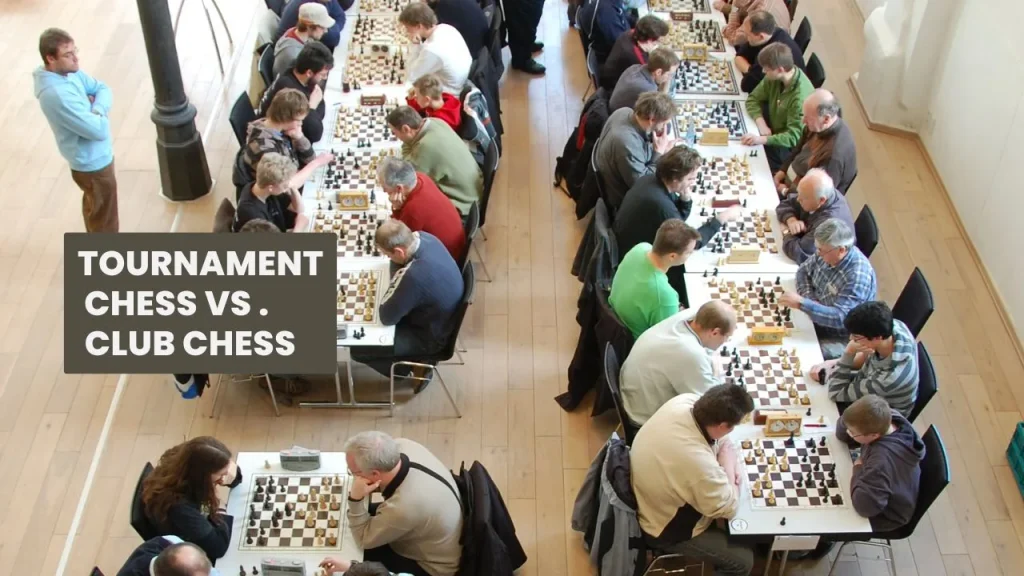
Tournament Chess vs Club Chess: The Seriousness Gap
Underneath all of this is one bigger difference worth mentioning. What differentiates a tournament player from a club level player is seriousness. Tournament players know how to convert till the end, while at a chess club, we often play casually, just for fun. The rating gap between a tournament and a club is also significant. Keep this in mind going into a game because it changes how you should approach the board. And remember: play the board, not the player.
You might have a skill gap against a higher-rated opponent, but if you don’t let their rating intimidate you, you can win the psychological battle first. Focus on the position in front of you, make the best moves you can, and let the rating take care of itself.
Before You Sit Down at the Board
With all that in mind, here’s the short version for the morning of. Don’t panic. Prepare the basics, not some last-minute gambit, and avoid playing gambits altogether. Play solid openings, ones where you can actually get a good position. Hold your nerve, calculate well, and win.
That’s really the whole idea behind how to prepare for a FIDE rated tournament as an unrated player: train like it matters, walk in knowing what to expect, and let the rating take care of itself. And if any of these ideas feel unfamiliar, reading the basics of chess are worth a quick refresher.
Frequently Asked Questions
1. Can a complete beginner play in a FIDE rated tournament?
Yes, but rating and exposure are two different goals. Anyone can enter a FIDE rated event, but if your online rating is below 1000, playing purely to gain your first FIDE rating is likely to leave you with a low entry number you will spend several tournaments climbing back from.
2. How many games do I need for my first FIDE rating?
Under FIDE’s current regulations, you need at least 5 games against already-rated opponents, spread across one or more tournaments within a 26-month window, and you must score at least half a point in those games. You also need to hit a rating performance of 1400 or above, since FIDE raised the minimum published rating floor to 1400 from March 2024. If your performance comes in below that, you stay unrated until you clear it.
3. Is a FIDE rating different from an AICF or online rating?
Yes. FIDE rating is the international standard used worldwide, while AICF and online platform ratings are separate systems with their own calculations. They often don’t align closely, especially early on.
4. What should I avoid doing before my first FIDE rated tournament?
Avoid last-minute opening prep, especially gambits or sharp lines you haven’t actually played before. Avoid skipping your endgame study in favour of only openings and tactics. And avoid walking in without knowing the basic tournament-day rules, especially the electronics restriction, since that one catches out more first-timers than any chess mistake does.